

Buying a high-value card? Match the exact printing before you compare prices, verify the seller, and treat auction current bids as estimates — not the final price.
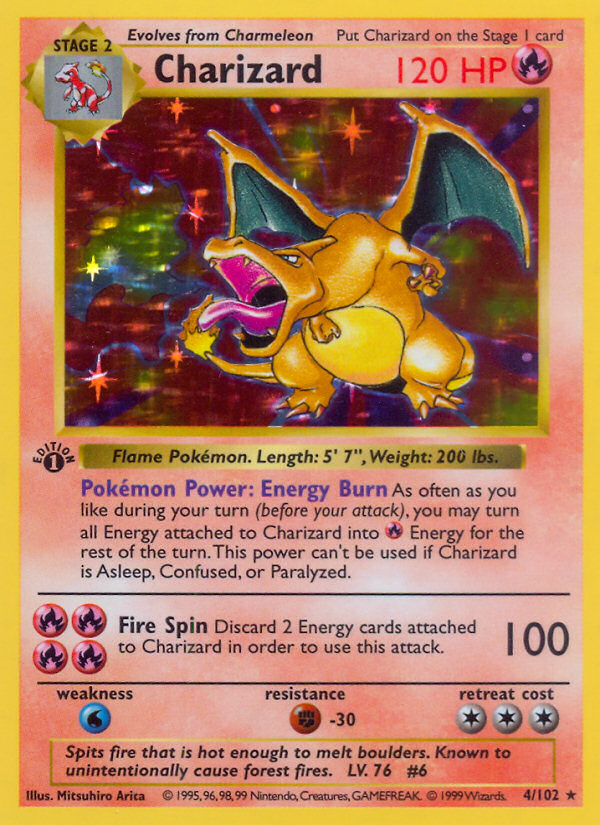
Charizard (Base Set)
How much is Charizard worth? — live price & value guide
The most iconic Pokémon card ever printed, and the vintage grail most collectors chase first.
Part of the Base Set set.
Buying options
Loading…Price history
The lowest listing we've tracked for Charizard over time.
Recent sold comps
What buyers actually paid on eBay — anchors deal scores alongside live listings.
Loading recent sold comps…
- Year
- 1999
- Card no.
- 4/102
- National Dex
- #6
- Type
- Fire
- Illustrator
- Mitsuhiro Arita
- Language
- English
Printed in huge numbers, yet clean gem-mint holos are genuinely scarce — most surviving copies carry holo scratches, edge whitening, or off-centering.
Why Charizard holds value
Charizard's Base Set holo is the card that defined the hobby. Nostalgia, a legendary fire-type, and a genuinely scarce supply of clean copies keep demand relentless — condition and grade drive enormous swings in value.
- +Card #4/102 in the 1999 Base Set.
- +Shadowless and 1st Edition printings command steep premiums over Unlimited.
- +Centering, holo scratches, and edge whitening are the usual grade-killers.
PSA 10 vs PSA 9 vs raw for Charizard
Base Set Charizard is a condition play: sort the live listings by grade first, because a PSA 10 can trade at a large multiple of a PSA 9. Within a grade, the fair price is roughly the recent sold-comp band — anything well under it usually means a lower printing (Unlimited vs. Shadowless), a qualifier on the slab, or a listing worth scrutinising. Raw copies should sit well below graded ones to price in grading risk.
Graded vs raw guide · PSA 10 vs raw for Canadians · How much is my card worth?
Variants & printings
The same card exists in more than one printing. Match the listing to the right one before you compare prices.
A small '1st Edition' stamp sits to the lower-left of the artwork. Also shadowless.
The earliest, smallest print run — by far the most valuable printing.
No drop-shadow along the right edge of the artwork frame; colours are thinner and more saturated. No 1st Edition stamp.
Early Unlimited-era print, well above standard Unlimited.
A grey drop-shadow runs down the right side of the art frame. The common print.
The baseline printing most copies belong to.
How to spot the real Charizard
- 1Confirm the card number reads 4/102 and the set symbol is the Base Set circle.
- 2Check the right edge of the art box: a drop-shadow means Unlimited; no shadow means Shadowless (or 1st Edition if the stamp is present).
- 3Genuine holos have a sharp, tight foil pattern — blurry text or a matte 'holo' area is the tell-tale of a proxy or reprint.
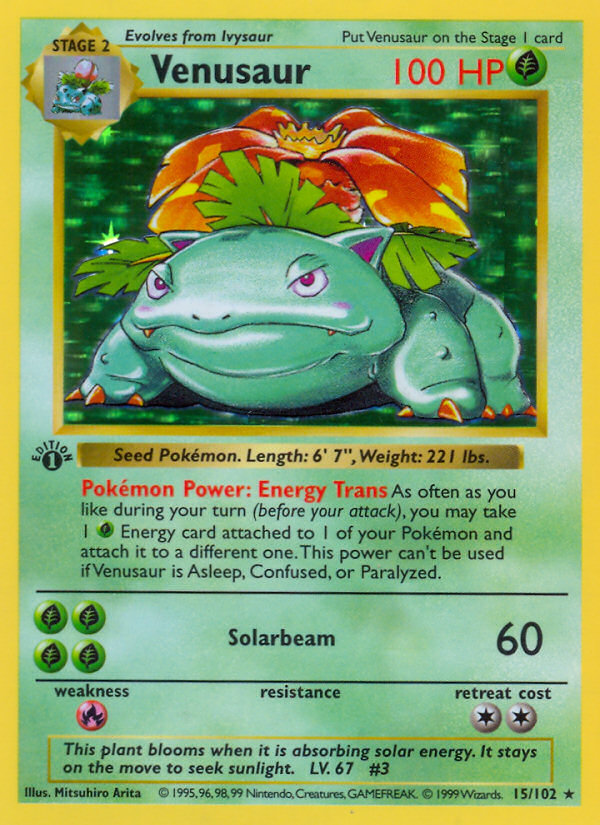
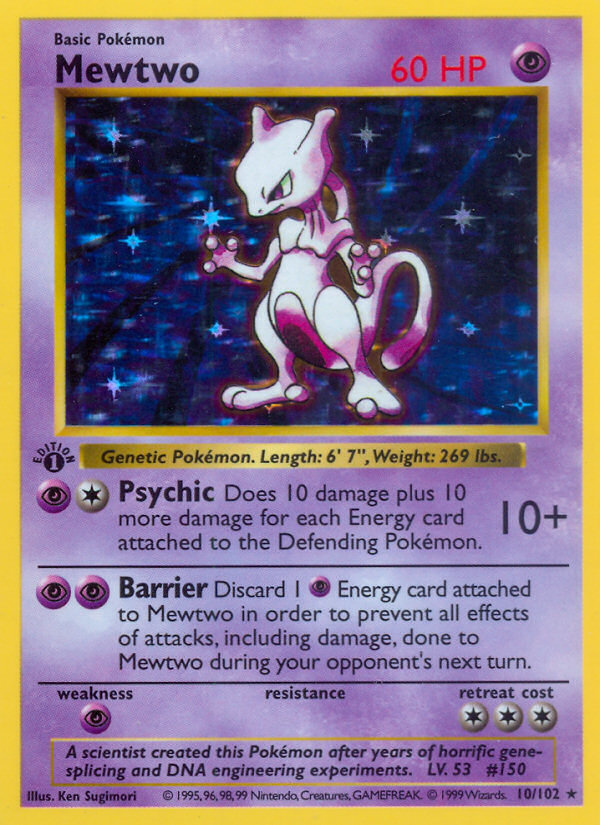
From the Base Set set
See the full set →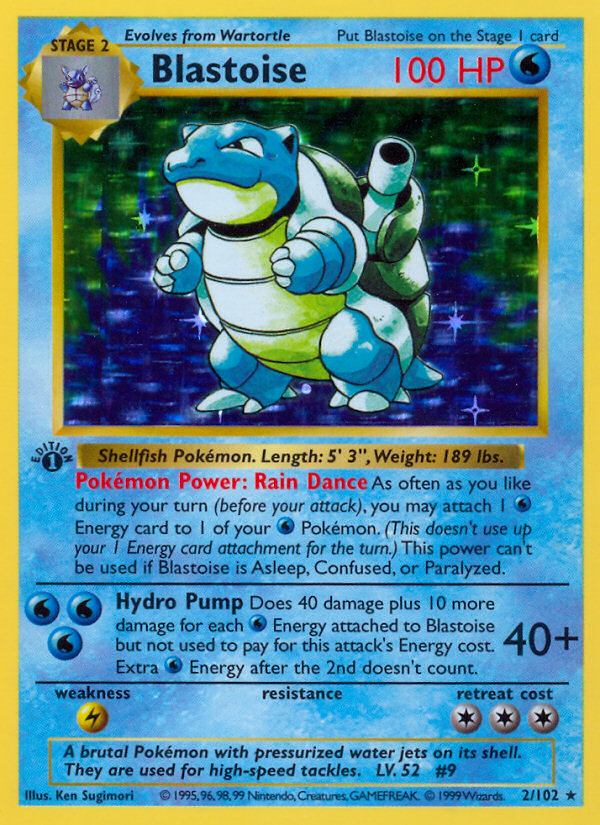
Frequently asked
Is a PSA 10 Base Set Charizard worth it over a PSA 9?
On a chase card this iconic, the jump from PSA 9 to PSA 10 can multiply the price several times over because gem-mint copies are genuinely scarce. Check current sold comps for both grades before deciding — the premium is the whole game.
How do I tell if my Charizard is 1st Edition or Shadowless?
1st Edition has the small '1st Edition' stamp to the left of the artwork. Shadowless copies lack the drop-shadow on the right side of the card border and have thinner, more saturated art. Both are worth far more than the common Unlimited print.
Learn more
Related cards
Track this in your portfolio
Add Charizard to your holdings to watch live value and P/L against what you paid.
Add to portfolioNever overpay again
Set your target price for Charizard and GrailHawk alerts you the moment one lists at or below it.